
Allmed Labs
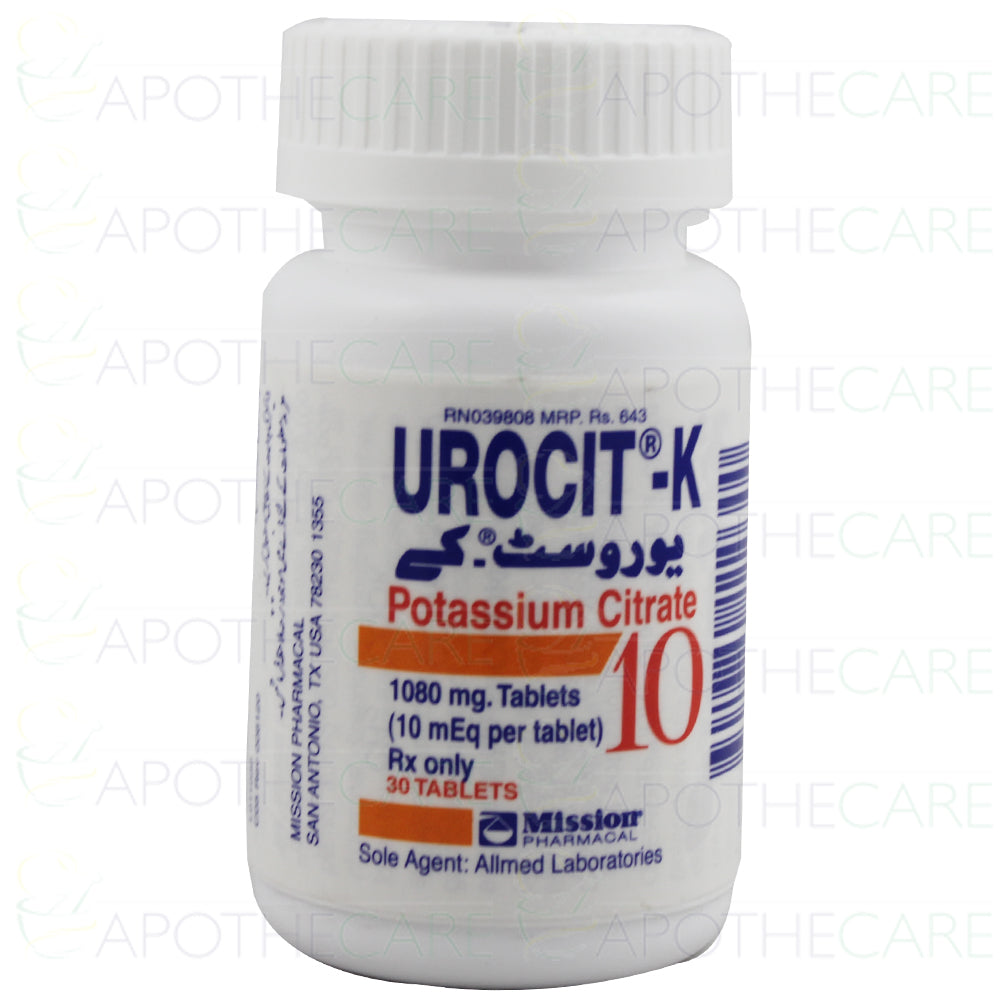
Urocit K Tab 30-s
Potassium Citrate 1080mg / 10 mEq
Inclusive of all taxes · Pack of 30 Tab
Pharmacist-picked alternatives
Prescription may be requested
This medicine is marked as relaxed. You can order it now, and our pharmacist may ask for a prescription before dispatch if needed.
Frequently asked
Does Urocit-K dissolve existing kidney stones?
It may help dissolve or prevent certain uric acid stones by making urine less acidic. It is not equally effective for all stone types, and calcium-containing stones may require different management. Stone type and treatment response should be assessed by a clinician.
Verified by Ailaaj Pharmacist
Licensed · DRAP-compliant
All products are sourced from DRAP-licensed suppliers and verified by our in-house pharmacists before dispatch.
View trust & licensingProduct overview
Product Summary:
Helps reduce the formation of certain kidney stones by increasing urinary citrate levels and raising urine pH. Treatment is generally guided by the type of stone and urine test results.
Who It's For:
Patients prescribed potassium citrate for recurrent kidney stones, low urinary citrate, or certain conditions that cause persistently acidic urine.
Key Benefits:
Increases urinary citrate, reduces urine acidity, helps prevent certain calcium oxalate and uric acid stones, and supports long-term kidney stone management.
- Generic name
- Potassium Citrate 1080mg / 10 mEq
- Manufacturer
- Allmed Labs
- Form
- Tablet
- Pack size
- Pack of 30 Tab
- Prescription
- Relaxed — may be requested
- MRP
- Rs.1,304.10
Uses
Primary Use:
Prevention and management of selected kidney stones.
Also Used For:
Certain cases of renal tubular acidosis associated with kidney stones and other conditions requiring urinary alkalinization.
Who May Benefit:
Patients with recurrent calcium oxalate or uric acid stones, particularly when urine testing shows low citrate or excessive acidity.
Warnings & interactions
Warnings:
Potassium citrate can cause dangerously high blood potassium levels, especially in people with impaired kidney function. Medical monitoring of potassium, kidney function, and urine pH may be necessary. Seek urgent care for palpitations, severe weakness, or fainting.
Avoid If:
High blood potassium, significant kidney impairment, or conditions that prevent safe potassium excretion, unless a specialist specifically advises its use.
Interactions:
ACE inhibitors such as lisinopril, ARBs such as valsartan, potassium-sparing diuretics such as spironolactone, potassium supplements, and some NSAIDs can increase potassium levels. Discuss all medicines with the prescriber.
Generic & branded alternatives
Same active ingredients — verified equivalents you can switch to.